

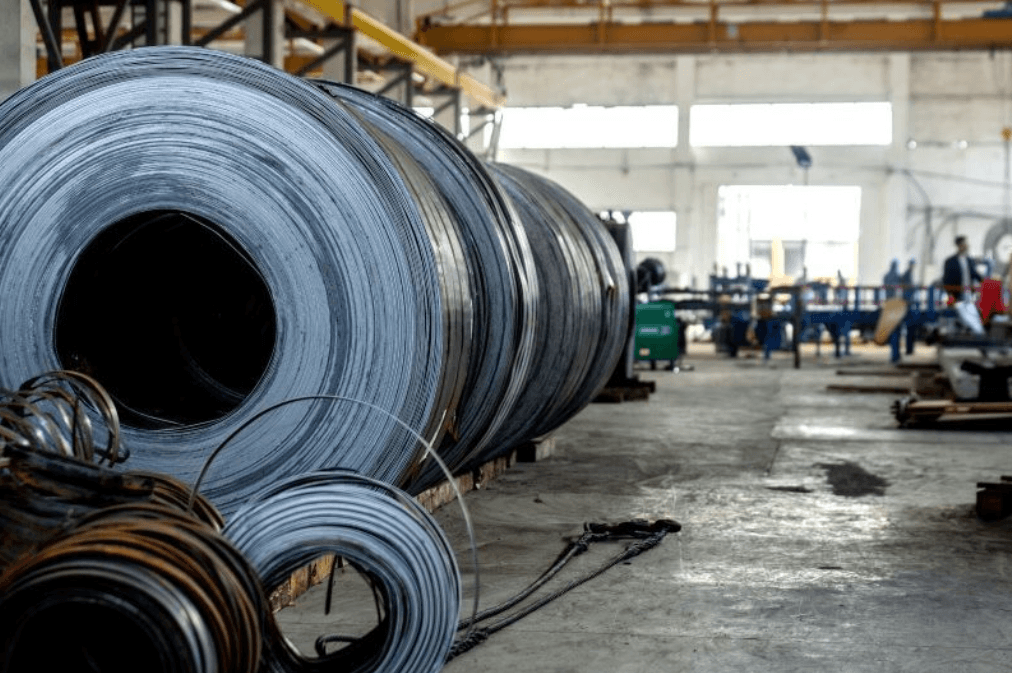
In the Indian MSME landscape, choosing between HR and CR steel isn't just a technicality - it’s a financial decision. The "rolling" process refers to how the steel is shaped at the mill, and this temperature difference dictates everything from your welding settings to your final paint quality.
1. Structural Integrity vs. Surface Precision
The most immediate difference a fabricator will notice is the physical state of the metal.
Hot Rolled (HR): Processed at temperatures above 900°C (red-hot, above the steel’s recrystallization temperature). As it cools, it shrinks slightly, leading to "mill scale" (a flaky blue-grey oxide) and less predictable dimensions. It is the "rough and ready" choice.
Cold Rolled (CR): This is HR steel that has been cleaned (pickled) and rolled again at room temperature. This results in a smooth, oily finish and dimensions that are accurate to the millimeter.
2. Strength and Workability
Beyond the surface, the mechanical behavior of these steels differs significantly:
- Yield Strength: CR steel generally has higher yield strength due to "strain hardening" during the cold rolling process, whereas HR steel offers standard structural strength.
- Ductility: HR steel is highly ductile, making it much easier to bend and shape into large structures without cracking. CR is stiffer and can become brittle if over-bent.
- Internal Stress: HR steel has low residual stress, meaning it won't "spring back" or warp as much after cutting. Conversely, CR carries high internal stress and can "bow" or warp when laser-cut or heavily welded.
3. Cost Analysis: Purchase Price vs. Processing Cost
For a fabrication unit, the sticker price is only half the story.
The HR Advantage: Significantly cheaper per tonne. If your project is a massive warehouse shed or a heavy machine base, HR is the only cost-effective choice.
The CR Advantage: Though 20-30% more expensive upfront, CR saves money on labor. There is no mill scale to grind off, the surface is ready for powder coating, and the uniform thickness means your CNC settings stay consistent.
4. Application Breakdown for Fabrication Units
When to Choose Hot Rolled (HR):
- Heavy Construction: Beams, columns, and large-scale infrastructure.
- Agricultural Equipment: Frames for ploughs or trailers where "pretty" doesn't matter.
- Base Plates: Anything where the thickness is over 6mm and precision isn't the priority.
- Welding-Heavy Projects: HR is more forgiving during high-heat welding.
When to Choose Cold Rolled (CR):
- Electrical Panels: Where a smooth, professional powder-coated finish is required.
- Automotive Components: Brackets and hinges that require tight tolerances.
- Furniture & Cabinets: Where aesthetics and "touch-and-feel" are paramount.
- High-Speed CNC Machining: Because the dimensions are consistent, it won't jam your feeders.
5. FAQs:
Q: Which is better for welding?
A: Hot Rolled. It has lower residual stress, meaning your frames are less likely to pull out of square as the welds cool. However, you must grind off the mill scale first to ensure a strong bond.
Q: Can I replace CR with HR to save money?
A: Only if the application allows for looser tolerances and you have the labor capacity to perform extra surface finishing (sanding/priming).
Q: Why does my CR sheet warp when I laser cut it?
A: Cold rolling introduces "trapped" stresses. When the laser breaks the surface tension, the metal relaxes, often causing it to bow. HR is much more stable for intricate thermal cutting.


 +91 7208055523
 support@jswonemsme.com
 Help & support