

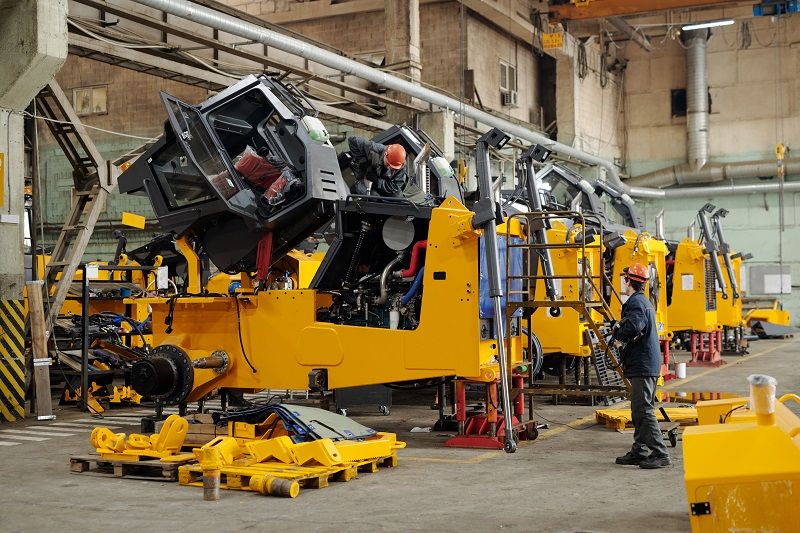
Introduction: why support structures determine machinery stability
Machinery performance does not depend only on moving components. The support structure - the frame, base, platform and mounting assembly - plays a critical role in stability, vibration control and load distribution.
In industrial plants across India, machinery support structures carry:
- Static load from equipment weight
- Dynamic load from operational movement
- Vibration from rotating components
- Shock load during start-stop cycles
For Indian MSMEs engaged in fabrication, equipment installation or industrial infrastructure, selecting the right structural steel directly impacts durability and operational reliability.
Ignoring structural integrity often leads to misalignment, excessive vibration and long-term fatigue cracking.
What qualifies as a machinery support structure?
Machinery support structures include:
- Machine base frames
- Equipment mounting platforms
- Structural columns
- Skid assemblies
- Elevated industrial platforms
- Support beams in manufacturing units
These structures are typically fabricated from high-strength sections such as beams, channels and plates sourced under certified categories like structural steel.
The goal is to distribute load evenly while preventing deformation over time.
Why structural steel is preferred for support systems
1. High load-bearing capacity
Machinery bases must support concentrated loads without bending or permanent deformation.
Structural steel grades such as IS 2062 E350 provide:
- Higher yield strength
- Improved stiffness
- Reliable performance under continuous load
Compared to standard mild sections, structural steel offers better rigidity.
2. Vibration resistance
Rotating equipment such as pumps, compressors and turbines generate continuous vibration. Weak or poorly designed support structures amplify vibration instead of absorbing it.
Properly selected structural steel improves:
- Damping behaviour
- Load distribution
- Structural alignment
Excess vibration accelerates wear in bearings and couplings.
3. Fabrication efficiency
Structural sections are manufactured through controlled rolling processes. Hot rolled steel beams and plates provide cost-effective solutions for thick structural assemblies.
For MSMEs, ease of welding and availability in multiple sizes improves fabrication efficiency.
Uniform steel roll quality reduces distortion during welding.
4. Durability under dynamic loading
Support frames experience not just static weight but fluctuating loads.
Key performance requirements include:
- Resistance to fatigue cracking
- Structural stability under repeated load
- Low residual stress
Proper steel manufacturing ensures grain consistency and predictable mechanical behaviour.
Design considerations for MSMEs
When fabricating machinery support structures, MSMEs must evaluate:
- Load calculations : Accurate load estimation prevents underdesign or overdesign.
- Section selection: Choosing appropriate beam or channel size ensures safety and cost balance.
- Welding quality: Improper weld joints reduce structural integrity.
- Corrosion protection: In humid or coastal environments, coating or galvanisation may be required.
Reliable sourcing of industrial steel improves fabrication predictability.
Common mistakes in support structure fabrication
- Using undersized sections to reduce cost
- Ignoring dynamic load factors
- Poor weld penetration
- Skipping corrosion protection
- Failing to verify steel grade certification
Short-term savings often result in long-term operational instability.
Cost considerations
Structural steel represents a significant portion of fabrication cost. However, cost evaluation must consider:
- Equipment longevity
- Reduced vibration-related maintenance
- Lower realignment cost
- Improved operational safety
Selecting slightly higher-grade structural steel often reduces lifecycle maintenance expenditure.
FAQ
1. Why is structural steel used in machinery bases?
Because it offers high strength, rigidity and durability under load.
2. Can mild steel be used for support structures?
It can be used for light-duty applications, but heavy machinery requires structural grades.
3. Does hot rolled steel work for support frames?
Yes, hot rolled structural sections are commonly used for machinery frames.
4. How does poor structural design affect machinery?
It increases vibration, misalignment and fatigue failure risk.
5. How can MSMEs ensure structural reliability?
By calculating load accurately, selecting certified steel grades and maintaining proper welding standards.
Conclusion: stability begins with structural discipline
Machinery performance depends as much on support structures as on moving components. For Indian MSMEs, structural steel selection must align with load requirement, vibration exposure and environmental conditions.
Material compromise in support systems leads to operational instability and long-term cost escalation.
In industrial environments, strength below the machine is just as important as strength within it.


 +91 7208055523
 support@jswonemsme.com
 Help & support
