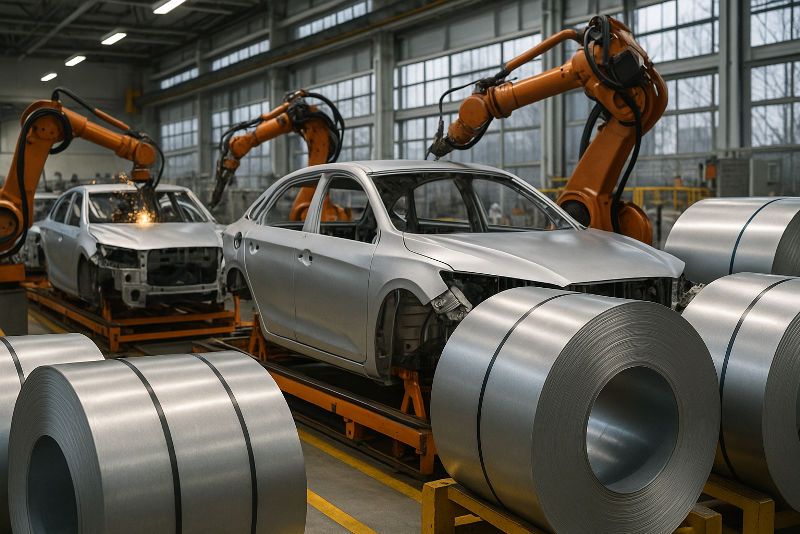
Steel remains the foundation of the global automotive industry - forming nearly 60% of a vehicle’s weight. It’s not just about strength; modern steels deliver the perfect balance of safety, lightweight design, and cost efficiency.
From the chassis and crash zones to engine parts and body panels, each vehicle component uses a specific steel type tailored for performance.
In this article, we’ll explore the main types of steel used in automotive manufacturing, why automakers prefer them, and how MSMEs can buy automotive-grade steel online at JSW One MSME.

 ....
Business
What Type of Steel Is Used in the Automotive Industry?
....
Business
What Type of Steel Is Used in the Automotive Industry?
What Type of Steel Is Used in the Automotive Industry?
Category Business | Posted on October 28, 2025
1. Mild Steel (Low-Carbon Steel)
Mild steel contains about 0.05 - 0.25% carbon, making it flexible, easy to form, and weldable - perfect for high-volume production.
Used in:
• Car body panels and chassis
• Bolts, brackets, and suspension parts
Why it’s used:
• Cost-effective
• Highly formable
• Recyclable and durable
Explore Hot Rolled Steel Coils for automotive applications.
2. High-Strength Low-Alloy (HSLA) Steel
HSLA steel combines manganese, chromium, and vanadium to increase strength without adding weight.
Used in:
• Side beams and door reinforcements
• Chassis and underbody structures
Benefits:
• 25-30% stronger than mild steel
• Improves crash resistance
• Enables lighter designs
3. Advanced High-Strength Steel (AHSS)
AHSS is a game-changer in modern car design. Its multiphase microstructure (martensite, ferrite, and bainite) provides both high strength and flexibility.
Used in:
• Crash-resistant zones
• Roof rails, bumpers, and pillars
Advantages:
• Reduces weight by 20-25%
• Enhances occupant safety
• Improves fuel efficiency
4. Stainless Steel
Containing 10.5% chromium, stainless steel resists corrosion and heat - perfect for components exposed to moisture and exhaust gases.
Used in:
• Exhaust systems
• Fuel tanks
• Trim and interior fittings
Benefits:
• Rust-proof and low maintenance
• High heat resistance
Explore Coated Steel Products for long-lasting automotive applications.
5. Galvanized Steel (Zinc-Coated Steel)
Galvanized steel has a zinc coating that protects against corrosion - making it ideal for the car body and underbody.
Used in:
• Doors and roofs
• Wheel arches and body panels
Benefits:
• Long life and rust protection
• Easy to paint
• Excellent finish quality
Check out Galvanized Coils available on JSW One MSME.
6. High-Carbon Steel
Containing 0.6-1.0% carbon, this steel offers exceptional strength and hardness, used in heavy-duty automotive parts.
Used in:
• Springs and axles
• Gears, bearings, and valves
Benefits:
• High fatigue strength
• Maintains shape under stress
7. Dual Phase (DP) & TRIP Steels
These next-generation AHSS steels are designed for crash safety and weight optimization.
Used in:
• Door frames and crash boxes
• Safety cells and pillars
Advantages:
• Absorbs high impact
• Reduces vehicle weight
• Improves energy efficiency
Why Automakers Still Prefer Steel
Despite the rise of aluminum and composites, steel remains unbeatable due to:
-High strength-to-weight ratio
-Easy recyclability
-Global availability
-Lower production costs
Over 95% of automotive steel is recyclable - making it a sustainable choice for a greener automotive future.
Final Takeaway
The automotive industry depends on specialized steel grades that ensure strength, performance, and safety. From mild steel for car bodies to AHSS and galvanized steel for crash zones and exteriors -each plays a unique role.
If you’re a manufacturer, fabricator, or MSME in the automotive sector, sourcing certified, high-quality steel is key to your success.
Register Now on JSW One MSME to explore automotive-grade steels, get transparent pricing, and access seamless procurement solutions.
FAQs
Q1. What kind of steel is used in car manufacturing?
Most vehicles use mild steel, high-strength low-alloy steel, advanced high-strength steel (AHSS), stainless steel, and galvanized steel for different components.
Q2. Why do car manufacturers use steel instead of aluminum?
Steel is stronger, more affordable, and easier to weld than aluminum. It also offers better crash protection and is 100% recyclable.
Q3. What steel is used for car body panels?
Car body panels are made from mild or galvanized steel due to their formability, corrosion resistance, and smooth surface finish.
Q4. Which type of steel is best for crash safety?
Advanced High-Strength Steel (AHSS) and Dual Phase (DP) steel are best for crash zones because they absorb impact energy and maintain structural integrity.
Q5. Is automotive steel eco-friendly?
Yes. Over 95% of automotive steel is recyclable, helping automakers lower carbon emissions and promote sustainable manufacturing.


Buy online
Mild SteelStructural SteelTMTCementJSW One MSME
About usBlogsSitemapJSW One TMTPolicy
Terms & conditionsPrivacy policyReturn policyBanking partner
Help & support
Contact usFAQs
 +91 7208055523
 support@jswonemsme.com
 Help & support
Download our App