

Introduction: why conveyors demand engineered steel selection
Conveyor systems are critical to material handling across industries such as cement, mining, warehousing, food processing, logistics and manufacturing. Though conveyors may appear mechanically simple, they operate continuously under load, friction and vibration.
For Indian MSMEs engaged in conveyor system manufacturing - including frame fabrication, roller production, support structures and drive assemblies - steel selection directly affects durability, alignment stability and operational efficiency.
Improper grade selection can lead to:
- Structural sagging
- Roller shaft bending
- Frame vibration
- Premature wear
- Increased maintenance
In high-throughput industries, conveyor downtime translates directly into production loss. Therefore, steel used in conveyor manufacturing must be chosen with performance and lifecycle cost in mind.
Where is steel used in conveyor systems?
Conveyor systems typically include:
- Main support frame
- Roller shafts
- Drive shafts
- Mounting brackets
- Skid structures
- Platforms and supports
Each component demands specific steel properties.
1. Structural steel for conveyor frames
The main conveyor frame must support:
- Belt weight
- Material load
- Dynamic vibration
- Alignment stress
Structural sections such as beams, channels and plates are commonly sourced under certified categories like structural steel.
Key requirements include:
- Adequate yield strength
- Resistance to bending
- Good weldability
- Dimensional consistency
For long-span conveyors, structural rigidity is especially critical to prevent sagging.
2. Hot rolled steel in heavy-duty conveyors
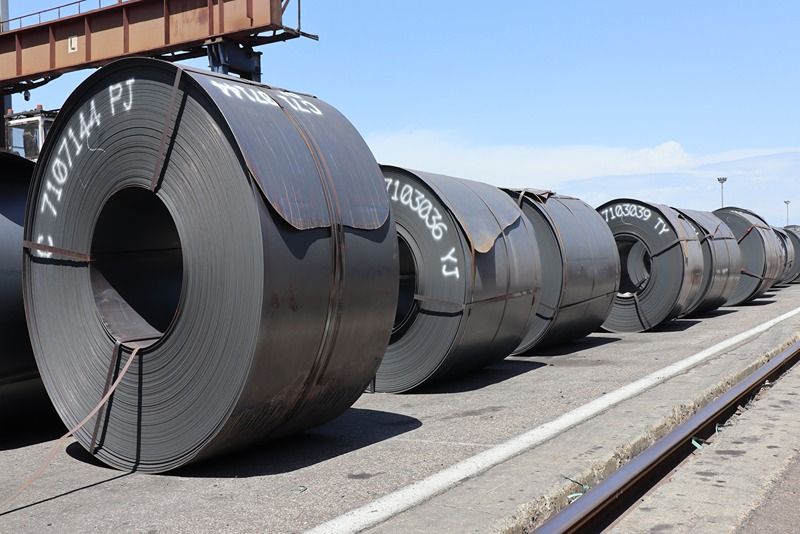
Heavy-duty conveyors in mining and cement plants often use thick plates and large structural sections. Hot rolled steel is commonly used due to:
- Cost efficiency
- Availability in thick sections
- Good weld performance
- Structural reliability
Hot rolled beams and plates provide a balance between affordability and mechanical performance.
3. Alloy steel in roller and drive shafts
Roller shafts and drive shafts experience rotational stress and cyclic loading. Inadequate material strength can lead to shaft bending or fatigue failure.
Alloy steel is often preferred for:
- Improved tensile strength
- Enhanced fatigue resistance
- Better impact tolerance
For MSMEs manufacturing shaft components, material precision significantly reduces field failures.
4. Corrosion resistance in specific environments
Conveyor systems used in:
- Coastal ports
- Fertiliser plants
- Chemical units
- Food processing industries
require corrosion-resistant steel or protective coatings.
Surface treatment and coating on base industrial steel can extend operational life and reduce maintenance cycles.
Ignoring environmental exposure leads to rust formation and structural weakening.
5. Fatigue and vibration management
Conveyor systems operate continuously, often 24/7. Repetitive loading creates cyclic stress in:
- Frame joints
- Welded sections
- Roller mounts
Steel used must have:
- Uniform grain structure
- Low internal defects
- Predictable fatigue behaviour
Poor-quality steel roll or inconsistent steel manufacturing increases risk of crack initiation at weld zones.
Cost considerations for MSMEs
Conveyor manufacturers operate in competitive markets where cost efficiency is critical. However, cost comparison must consider:
- Fabrication efficiency
- Welding quality
- Rework probability
- Warranty exposure
- Downtime liability
Using lower-grade steel in structural frames may reduce initial cost but increase long-term maintenance complaints.
Balancing material cost with durability improves customer retention and reputation.
Common mistakes in conveyor fabrication
- Undersizing structural beams to reduce cost
- Ignoring shaft fatigue strength
- Using untreated steel in corrosive environments
- Overlooking weld quality control
Material compromise often results in operational misalignment and belt tracking issues.
FAQ
1. What type of steel is commonly used in conveyor frames?
Structural steel grades are commonly used for frame fabrication.
2. Why is hot rolled steel preferred for heavy conveyors?
Because it offers strength, weldability and cost efficiency in thick sections.
3. Should alloy steel be used in shafts?
Yes, especially in high-load or high-speed applications.
4. How does corrosion affect conveyor systems?
Corrosion weakens structural members and increases maintenance frequency.
5. How can MSMEs reduce conveyor failure risk?
By aligning steel grade with load, environment and operational cycle demands.
Conclusion: material precision ensures material flow reliability
Conveyor systems may seem straightforward, but their reliability depends heavily on steel quality and structural design discipline.
For Indian MSMEs, selecting the right steel grade for frames, shafts and supports improves alignment stability, reduces downtime and enhances long-term performance.
In material handling systems, durability begins at the fabrication stage - with informed steel selection.


 +91 7208055523
 support@jswonemsme.com
 Help & support